
The Ancient Art of Yakisugi - and Why Most of What You're Looking at Isn't the Real Thing
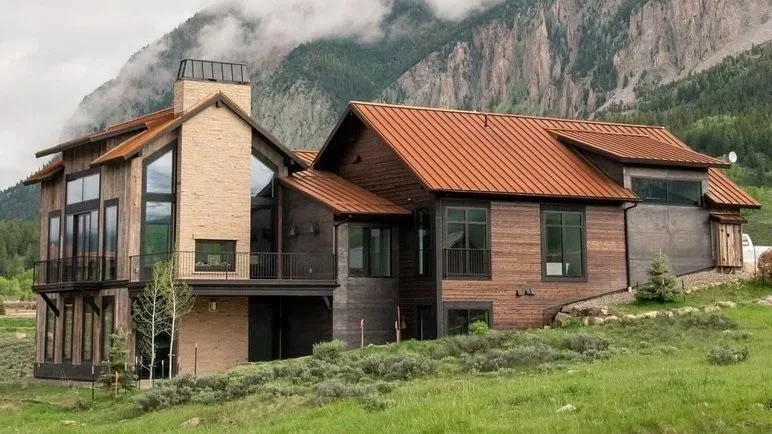
Middle Tennessee's only source for authentic, 100% made-in-Japan charred wood cladding - and what that actually means for your build.
Location: Nashville, TN · Serving Middle Tennessee
Category: Building Materials · Cladding
Read Time: 6 minutes
What Is Yakisugi - and Where Did It Come From?
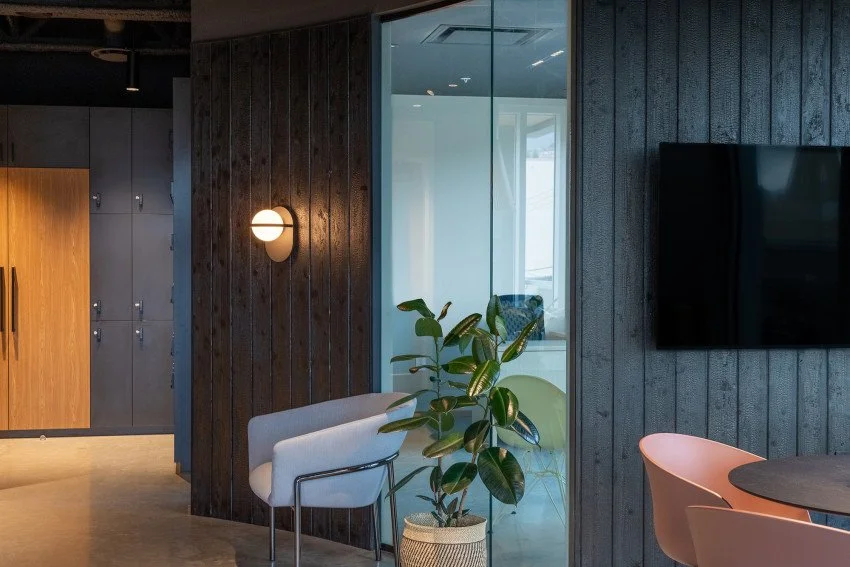
Yakisugi (焼杉) - also known in Western markets as shou sugi ban, is a centuries-old Japanese wood preservation technique rooted in the forests of rural Japan. The name translates literally to "burnt cedar," and the process is exactly that: Japanese cedar (sugi) is charred by open flame, then cooled, brushed, and finished with natural oils to seal the carbonized surface.
The result is wood that resists fire, insects, moisture, UV damage, and rot - often for 50 to 80 years or more with minimal maintenance. Japanese farmhouses and temples have featured yakisugi cladding for generations. It's a time-tested building system.
A note on the name: "Shou sugi ban" is a Western phonetic transliteration that became popular in design media during the 2010s. In Japan, the material and the craft are simply called yakisugi. Both terms refer to the same tradition — but the language matters when sourcing the real thing.
A note on the name:
"Shou sugi ban" is a Western phonetic transliteration that became popular in design media during the 2010s. In Japan, the material and the craft are simply called yakisugi. Both terms refer to the same tradition - but the language matters when sourcing the real thing.
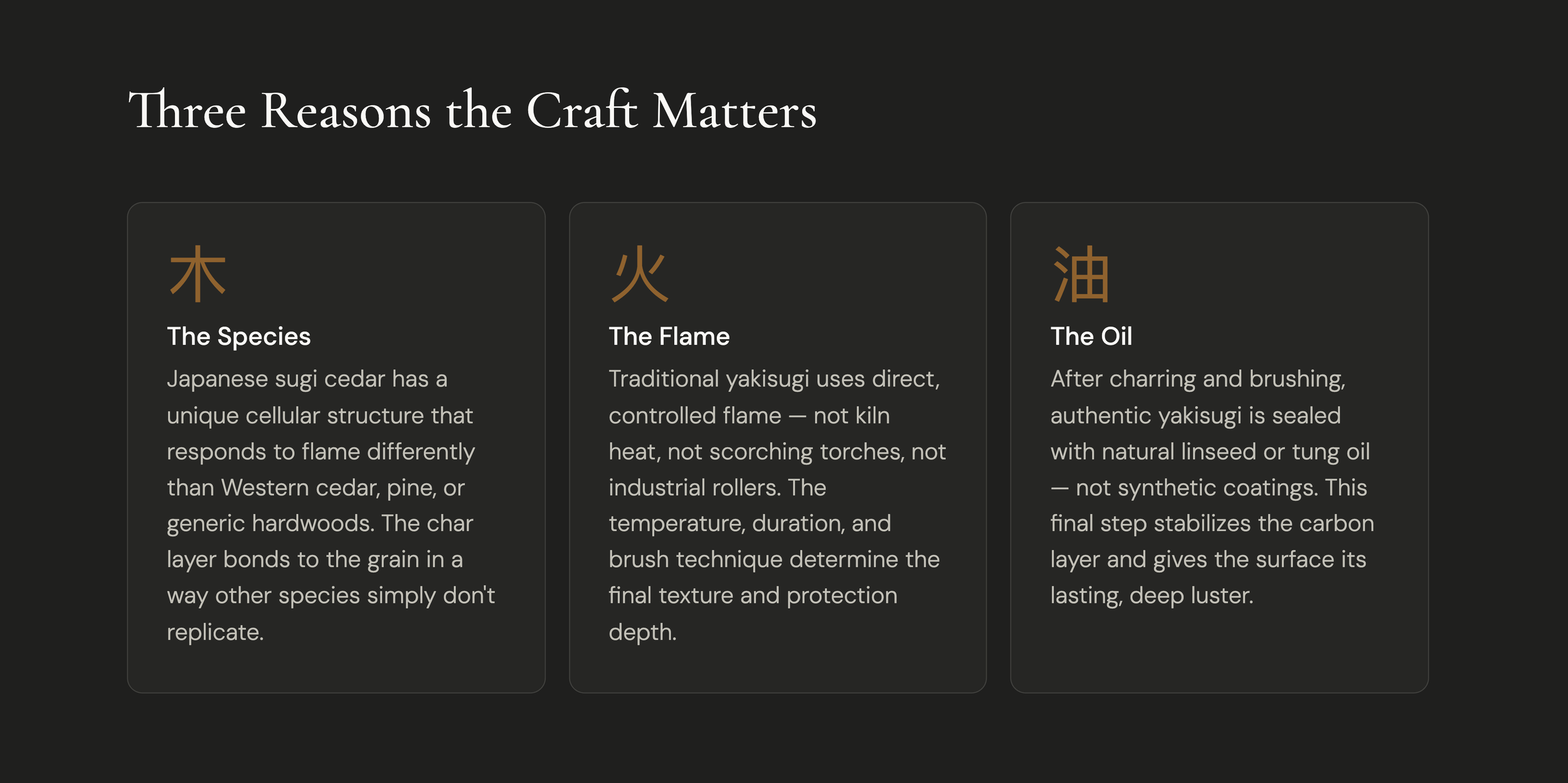
Three Reasons the Craft Matters
The Problem: "Yakisugi" Has Become a Buzzword
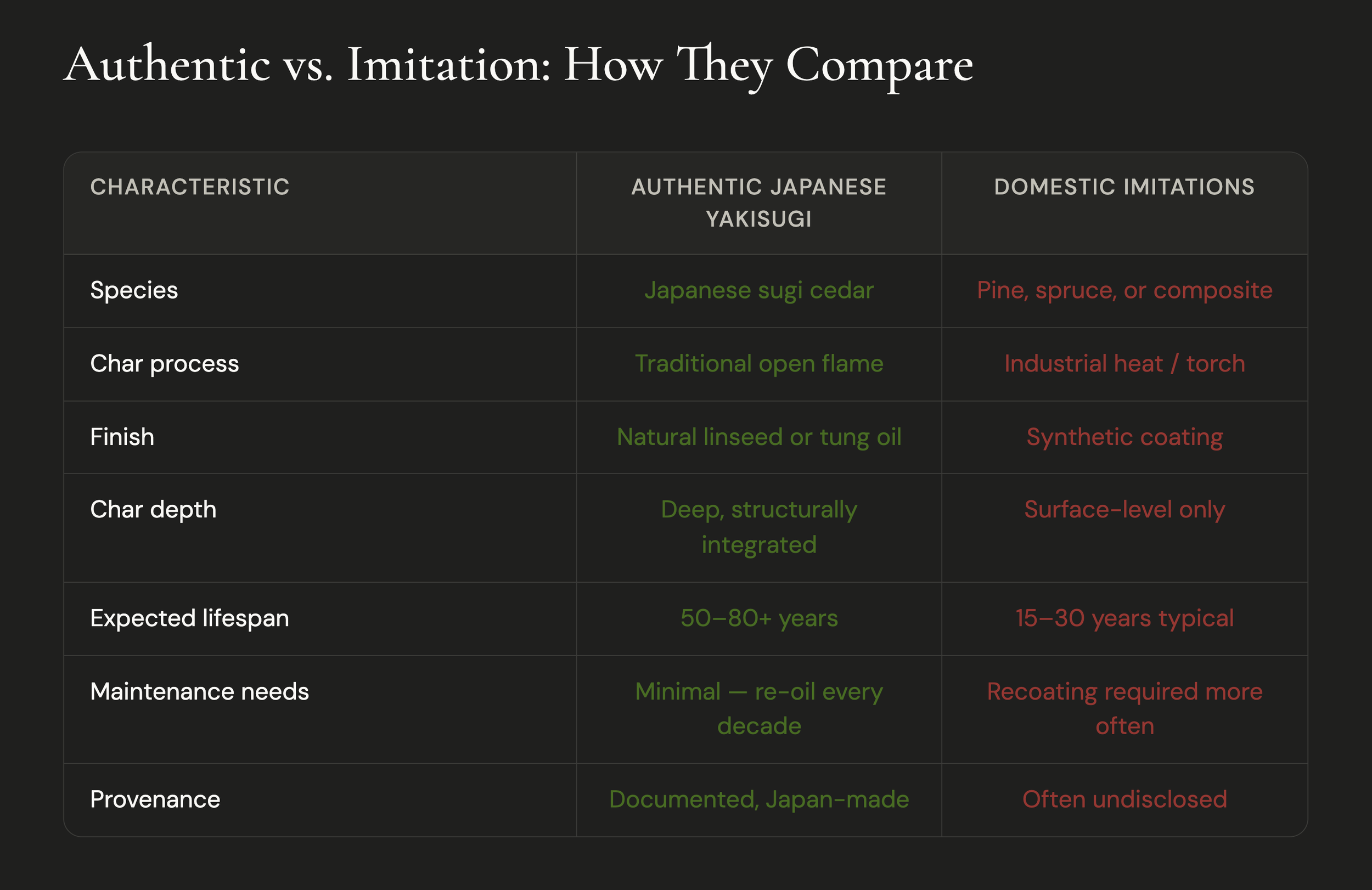
Over the past decade, as yakisugi surged in popularity through architecture and design media, the market responded with imitations. Today, you'll find products labeled "charred wood cladding," "shou sugi ban," or "burnt wood siding" that are produced domestically from pine, spruce, or composite substrates - torched by automated equipment, then sealed with synthetic finishes that can crack or peel over time.
These products may look similar in a brochure. But they are not the same material, and they will not perform the same way over time. The char layer is shallower. The species doesn't have the same grain density. The durability claims don't hold up to the same scrutiny.

Why Architects and Builders in Middle Tennessee Are Specifying It
Yakisugi has found a natural home in contemporary residential and commercial architecture across the Southeast. The contrast of dark charred cladding against Tennessee stone, glass, or board-and-batten is striking, and deeply intentional. It doesn't try to blend in. It anchors a building to the landscape through material honesty.
Beyond aesthetics, builders appreciate the low-maintenance performance profile. Yakisugi doesn't need painting, staining, or annual treatment cycles the way conventional wood siding does. Once installed and properly oiled, it largely takes care of itself. In a climate like Middle Tennessee's - with humidity swings, UV exposure, and ice risk.
Common applications we're seeing locally:
Residential exterior cladding on modern farmhouses and lake homes · Feature walls and accent panels on commercial builds · Interior accent walls in hospitality and retail spaces · Architectural detail work on covered porches, soffits, and pergolas
What to Ask When Sourcing Yakisugi
If you're comparing products — from us or anyone else — here are the questions worth asking before you spec a material:
Where was it made? Not "where was it sourced" or "where was it distributed." Where was it actually produced? Japan is the answer that matters if you want authentic yakisugi.
What species is it? Sugi (Japanese cedar) is not the same as Western red cedar, pine, or engineered wood substrates. The species is foundational to performance.
What is the charring method? Traditional flame charring produces a chemically different surface than industrial heat exposure. Ask for process documentation.
What is the finish? Natural oil vs. synthetic coating is a meaningful distinction for long-term durability and maintenance requirements.
We are happy to answer all of these questions for every product we carry - and to put the answers in writing. That's what it means to stand behind a material.
Available Now in Middle Tennessee
We are the only dealer in Middle Tennessee carrying 100% made-in-Japan yakisugi. We serve architects, custom builders, general contractors, and design-build firms across Nashville, Smyrna, Murfreesboro, Franklin, Brentwood, Columbia, and the broader Middle Tennessee region.
Whether you're early in the specification process or ready to place an order, we're available to discuss lead times, profiles, finish options, and project quantities. We work directly with builders and keep the process simple.