
Why Some Kitchens Feel Expensive Even When They Aren’t.
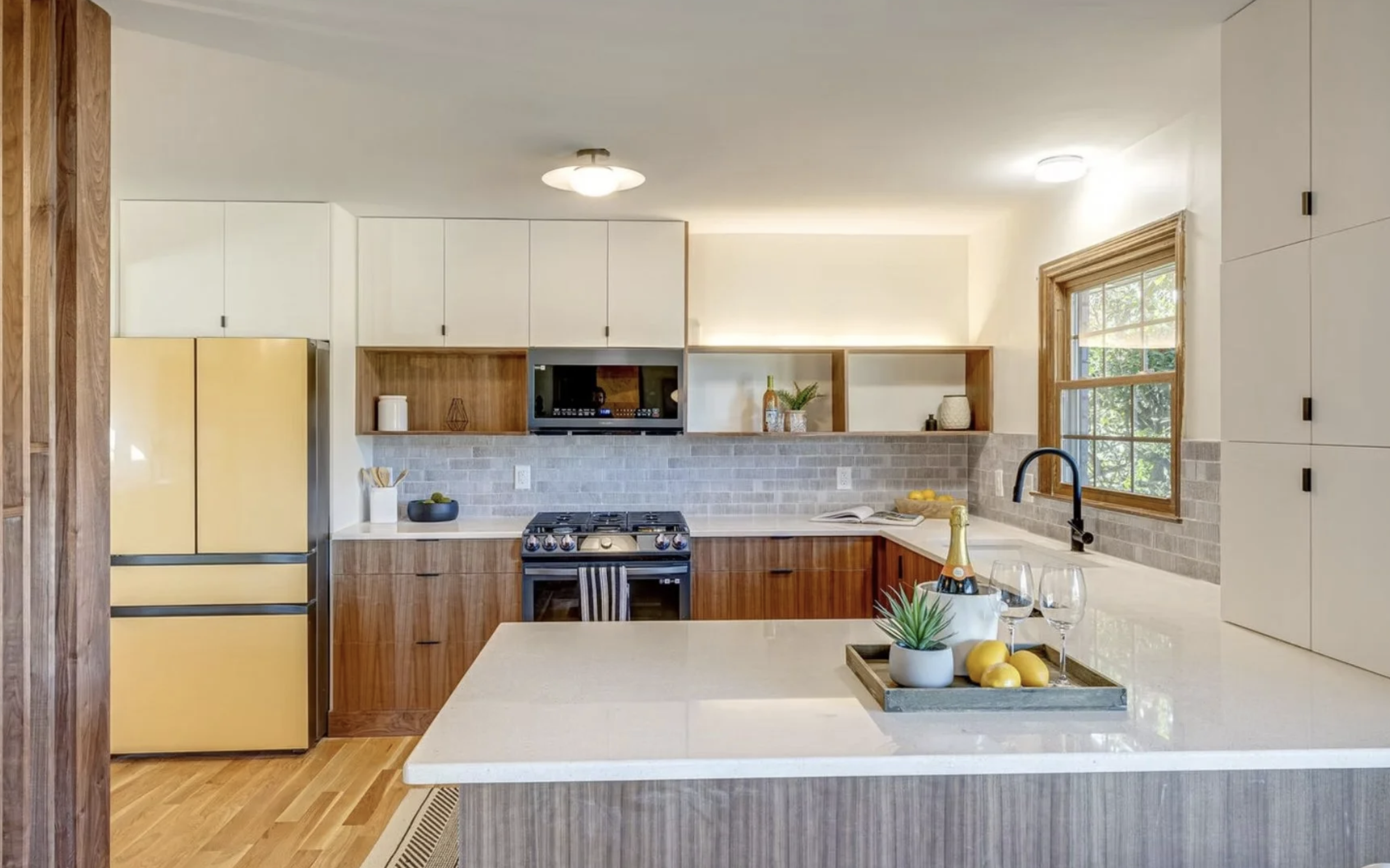
Sotobosque Kitchen in Nashville.
Most people think expensive kitchens are about marble.
Or giant islands.
Or luxury appliances.
Or how many pendants are hanging over the countertop.
But after years of walking through homes, you start noticing something strange.
Some kitchens with massive budgets still feel chaotic.
And some relatively simple kitchens feel incredible the second you step into them.
Not flashy.
Not trendy.
Just... good.
Usually the difference has very little to do with how much money was spent.
It’s almost always about restraint, proportion, and cabinetry.
The Kitchen Doesn’t Need to Impress You
This is where a lot of renovations quietly go wrong.
People design kitchens trying to create moments.
The dramatic backsplash.
The statement hood.
The giant waterfall island.
The floating shelves styled like a boutique hotel.
And individually, none of those things are bad.
But when everything is asking for attention at once, the room starts feeling noisy even if nobody can explain why.
The most expensive-feeling kitchens usually aren’t performing for you.
They’re supporting your life in the background.
There’s a difference.
Cabinetry Sets the Emotional Tone
Cabinets take up more visual space than almost anything else in the kitchen.
Which means they determine the atmosphere whether homeowners realize it or not.
You can put beautiful stone into a poorly proportioned kitchen and it still won’t feel right.
But thoughtful cabinetry with modest finishes can completely elevate a space.
Especially when:
cabinet heights feel intentional
lines align cleanly
proportions relate to the architecture
materials aren’t competing with each other
storage reduces visual clutter
A calm kitchen almost always feels more expensive than a cluttered one.
Even when it costs less.
Too Many Materials Is Usually the Problem
This is one of the biggest mistakes we see in Nashville remodels right now.
A homeowner falls in love with:
white oak cabinets
dramatic quartz
zellige tile
brass hardware
black windows
walnut shelves
statement lighting
All separately.
Then everything ends up in the same room fighting for oxygen.
Luxury interiors rarely feel luxurious because they added more.
Usually they removed more.
There’s a reason old European homes often feel so grounded. The palette stays disciplined.
A few materials.
Repeated consistently.
Allowed to breathe.
Lighting Matters More Than People Think
A kitchen can technically be beautiful and still feel stressful to stand in.
Bad lighting does that fast.
Particularly overly bright overhead lighting.
One of the easiest ways to make a kitchen feel more expensive is layering softer light:
under cabinet lighting
warm temperature bulbs
small lamps
indirect lighting
natural daylight priorities
People underestimate how emotional lighting is until they experience it done well.
The kitchen stops feeling like a workspace and starts feeling like part of the home.
Full Height Cabinets Almost Always Help
This is especially true in Nashville homes with decent ceiling height.
Cabinets stopping awkwardly short of the ceiling often make kitchens feel more builder-grade immediately.
Not always.
But often.
When cabinetry reaches the ceiling properly, the room usually feels:
more architectural
more intentional
less visually cluttered
more custom
Even simple shaker cabinets can feel dramatically more elevated with better vertical proportioning.
The eye likes order.
Hidden Appliances Change Everything
Nothing dates a kitchen faster than visual clutter.
And appliances create a lot of it.
One panel-ready dishwasher won’t magically transform a kitchen, but reducing interruptions absolutely changes the feel of the room.
Especially in open floorplans.
Integrated appliances, hidden trash pullouts, appliance garages, and thoughtful storage all contribute to something homeowners often struggle to describe:
mental calm.
That’s part of what people are reacting to when they say a kitchen feels expensive.
Not wealth.
Order.
Expensive Kitchens Usually Feel Less Busy
This is the irony.
Many budget kitchens try to look expensive by adding features.
Actually expensive-feeling kitchens often do the opposite.
Fewer upper cabinets.
Cleaner countertop lines.
Less decorative molding.
Fewer competing textures.
Less visual interruption.
You see this constantly in Japanese interiors, Scandinavian homes, and older European kitchens.
The restraint is what creates the atmosphere.
Not the abundance.
Scale Matters More Than Luxury Finishes
Sometimes a kitchen feels “off” simply because the proportions are fighting the house.
Huge oversized islands shoved into modest homes.
Tiny pendant lights floating awkwardly in giant spaces.
Massive hood vents dominating lower ceilings.
A well-scaled kitchen with simpler finishes will almost always feel better than an overdesigned kitchen chasing luxury aesthetics.
Good design has rhythm to it.
You feel it immediately even if you can’t explain it.
The Most Expensive Feeling Kitchens Usually Feel Personal
Not customized in a flashy way.
Personal in a lived-in way.
You can tell someone thought carefully about:
where morning light enters
where coffee gets made
where backpacks get dropped
where guests naturally gather
what needs to stay hidden
what deserves to stay visible
Those kitchens age well because they weren’t designed for Instagram first.
They were designed for actual life.
Ironically, those often photograph better too.
Natural Materials Age Better
This doesn’t mean every kitchen needs imported stone and handcrafted tile.
But people respond emotionally to real materials.
Wood grain.
Aged brass.
Natural stone movement.
Limewash texture.
Paint that softens over time.
Perfectly flat synthetic surfaces can sometimes feel emotionally cold even when they’re expensive.
Meanwhile slightly imperfect natural materials often create warmth almost automatically.
Humans tend to relax around things that feel real.
Our Perspective
We’ve seen homeowners spend enormous amounts of money and still miss the feeling they were chasing.
Usually because they thought expensive meant adding more luxury signals.
But the kitchens people continue loving ten or fifteen years later tend to share different qualities:
restraint
warmth
proportion
natural materials
thoughtful cabinetry
visual calm
Not trend overload.
And honestly, some of the best kitchens we’ve seen weren’t the most expensive ones at all.
They just understood what mattered.
A kitchen doesn’t feel expensive because it announces itself loudly.
Usually it feels expensive because nothing feels accidental.
The cabinetry aligns.
The lighting softens the room at night.
The materials stop competing.
The storage works.
The room breathes.
And over time, that atmosphere matters more than almost any individual feature.
Because long after people stop noticing the countertop selection, they still notice how the kitchen made them feel while life was happening inside it.